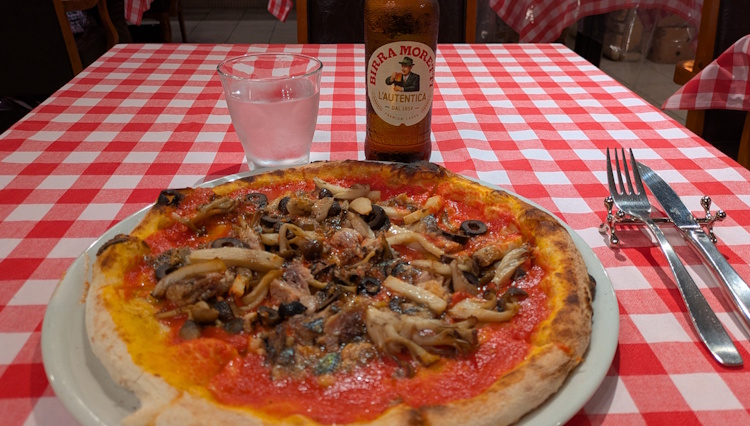
As part of our reporting on pizza in Kobe, we present this review of Trattoria E Pizzeria Elefante – serving Neapolitan-style pizza in Kobe at an excellent, “family style,” Italian restaurant. Nice place, great pizza.
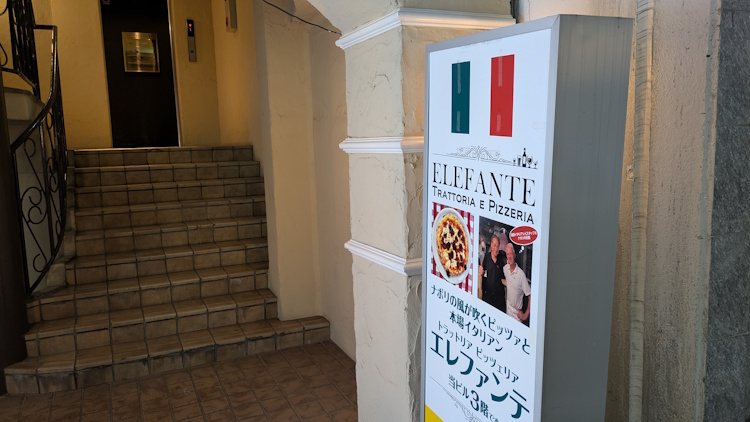
We know the exact name of this spot is Trattoria E Pizzeria Elefante – with an “E” (meaning “and”) and the more-Italian “F” instead of “PH” in “Elefante.” But because we are describing an Italian business, in Japan, and often using English to do it, we get a mix of names. On Google you’ll find this business listed as Trattoria & Pizzeria ‘Elephant.’ We know it is also likely called Elefante Pizza. By any name, the taste is just what you what it to be; very good pizza in the Italian tradition.
Kobe’s Elefante Pizzeria is located a very short walk from Sannomiya Station, on a quiet street, in architecture that (like a lot of Kobe) barely feels like you’re in Japan. “Where am I, again?” The Elefante restaurant is distinctly European, and even the building has Western qualities to it that are almost disorienting. Everything about Elefante feels more “solid,” more “built to last” (better materials), with a less temporary feel than the way most of Japan is constructed.
(There is a heavy influence of international culture in Kobe, including a section of town called Kobe Kitano Ijinkan-Gai – a once “foreign settlement,” that has many examples of expressly European buildings.)
“Yeah, yeah, sure, whatever; show me then pizza.” Okay, fair enough; here you go:
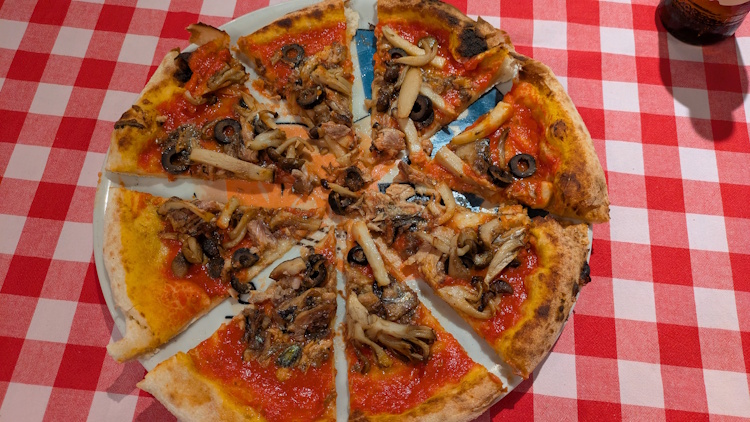
How’s that look? Pretty amazing, huh? It was fantastic.
Elephante Pizza in Kobe has an extensive pizza menu. Maybe twenty choices, covering the classic Naples-inspired range of pizza from the stripped-down Marinara to the spicy Diavola – and everything in between.
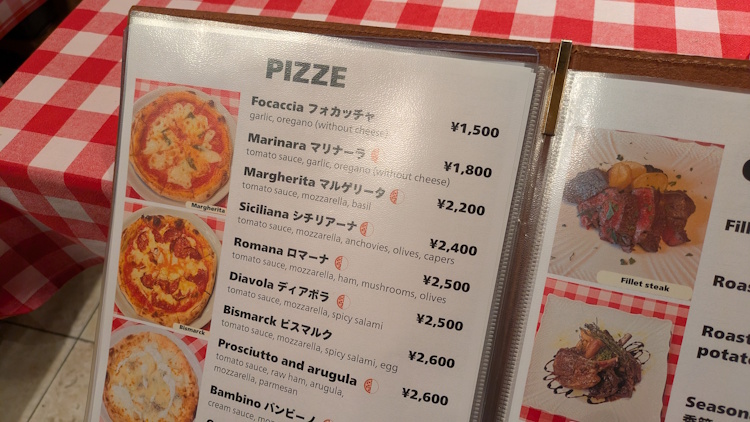
This is not strictly a “pizza joint,” it’s a “trattoria” – which is an Italian word (based on a French word) which loosely translates to “restaurant serving local, regional food.” The menu includes much more than pizza, and the interior feels like the kind of place you might come for pasta as much as a pie.
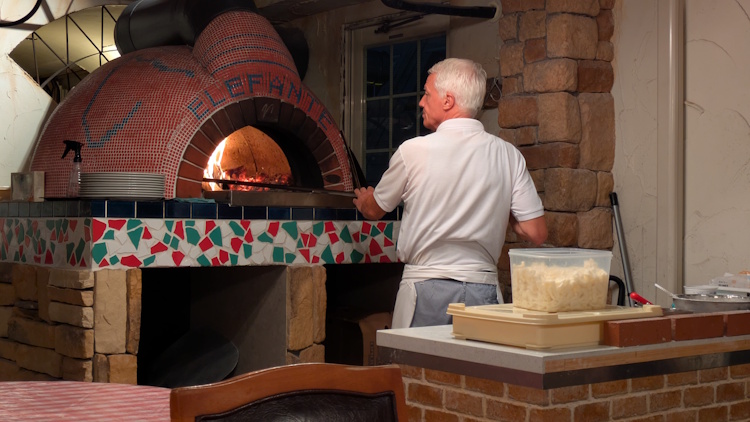
The interior is spacious, and comfortable. And there is that beautiful, domed oven. Wood-fired, yes.
As I enjoyed my meal, I noticed the pizzas were allowed to bake for well over a minute, beyond two minutes, and more. I have written about the pizza at Savoy in Asabujuban, Tokyo, and Di Massimo in Sapporo; at each of which they cook a pizza in as little as 50 seconds. Compared to most Napoletana pizza in Japan, the cook time is much longer at Elefante (although the product comes out equally wonderful). Hmmmm. I am always interested to learn about pizza, and there was something unusual about the time in oven at this spot (more on that below).
The pizza master is a white guy. Maybe 60 years old (?), white hair, good looking. His blue eyes reminded me of my grandfather (who was, as you know, also a Pizza Czar, like his father before him). Other than at pubs and bars, I don’t think I have ever been so aware of someone non-Japanese preparing my meal in Japan. Combined with the cuisine and the design of the room, it was part of the transported quality of my night at this spot.
While the traditional offerings on the pizza menu at Elefante were worthy of consideration (the opportunity to have a Siciliana, with olives and capers, is always a temptation that is difficult to resist), I was interested in their seasonal specials. Along with a special “Truffle Cream Bismarck Pizza,” there was another special that caught my eye:
Elefante Pizza was offering a pizza topped with fish. Growing up in America, (other than anchovies) we don’t see much “fish” pizza. It is my official opinion as Pizza Czar of Japan, that it is the “island” culture of Japan that so often pairs fish with pizza. I’m interested in “seafood pizzas” in Japan, and have been going out of my way to try them.
Elefante’s special fish pizza was made with Pacific Saury (a kind of mackerel) and mushrooms.
“Pacific Saury Mushroom Marinara Pizza: Tomato Sauce, Pacific Saury, Mushrooms, Olives, Anchovies, Oregano”
— From the “specials” on the Elefante Pizza menu
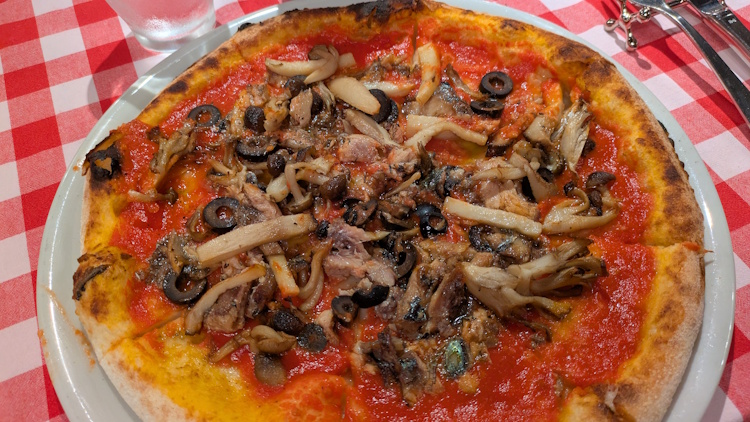
Hey, look at that. Beautiful.
“Also known as the Mackerel Pike, Pacific Saury is a staple in many cultures as both food and bait. Pacific Saury are a long, small-mouthed, silver-scaled fish that populate the Pacific Ocean.”
— A description of Pacific Saury from North Atlantic Pacific Seafood
Pacific Saury (cololabis saira) are called Sanma (秋刀魚) in Japan. This is a popular fish used in Japanese cooking, and is commonly served in the Fall (these pictures are from Fall 2025). The Saury was on the menu as it was part of the local fresh catch.
As I was saying, I have had a lot of seafood pizzas recently. Just on this trip to Kobe, I had the seafood pizza at Pizza Allocco, and then the “tako” (meaning “octopus”), spicy Normanna Pizza at Azzurri Pizzeria (which was fantastic, by the way).
In Hokkaido, I recently had the “Cod Confit” Pizza at Savoy Ezo in Sapporo; while that pizza was very good, the flavor of the fish was subtle. The Pacific Saury on this pizza at Elefante had a more insistent, powerful flavor (like sardines). There were also at least two kinds of mushrooms (bunashimeji and maitake, maybe eringi as well), and the fish-flavor fought through the earthy, woodiness of the ‘shrooms.
Garlicky; the mushrooms, spongy; salty fish; that burnt crust flavor. Wow. Interesting, special pizza. Heavily laden with toppings, very satisfying. Good stuff.
The crust was relatively minimally, playing a modest role at the margins. Most of its contribution coming from the charred bubbles.
Tasty pizza.

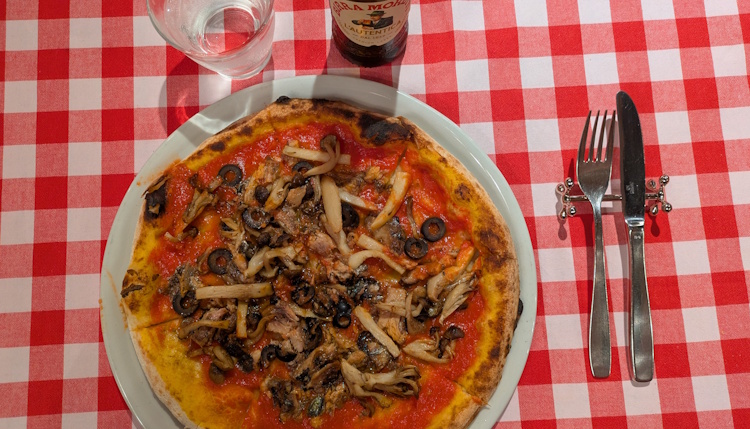
Did it pass the “pizza test?” Well, barely. The pictures here show it’s thin-crust pizza, but not infinitely thin. With the weight of all the toppings – you can see everything sliding off of the slice as you try to pick it up. If you wanted to try to tackle this one with knife and fork, no one could blame you.
I want to say more about how long the pizzas at Elefante in Kobe are baked:
At the risk of revealing my (pretty obvious) “pizza nerd” affinities I will confess; I am very interested in how pizza is made. And, I have been known to time the process. I mentioned earlier that many pizza ovens can cook a Naples-style pizza in under one minute (I still find that a remarkable fact), often about 50 seconds.
(This “50 seconds” cook time is specifically for Napoletana style pizza. For comparison, I was at The Pizza in Hiroo, Tokyo, recently, and for a typical “New York” Style pizza, they might bake in the oven for eight minutes or more. Chicago pizza can take 20 minutes. The cooking time depends on the style.)
As I watched the pizza master cook, I was expecting a one-minute process, and I couldn’t tell what he was cooking, because it was taking so long. For educational purposes (and my own maniacal curiosity), I set the timer on my phone…
From start (raw dough) to finished pizza, here is the process at Elefante:
0:00 dough hits the counter, and is stretched, toppings added
1:24 in the oven
2:20 threw some cardboard in to create flames/smoke
3:16 lifted, turned
4:20 he lifted it again, held it close to the roof of the oven
4:37 done
If I subtract the pre-oven prep time, that means that pizza was in the over for about three minutes, which is about 3X the cooking time of most of the pizza restaurants where I’ve watched (and timed) the process.
I had a chance to ask the pizza master, and he said, “It really depends on the oven.” That makes sense, of course it does. The time in the oven matters, but more importantly, it’s the condition of the pizza – when it’s ready, it’s ready.
That particular lesson was served from the pizza master, with a thick Italian accent. Grazie. I’m always eager to learn. And I *do* learn, every time I lean in and pay attention.
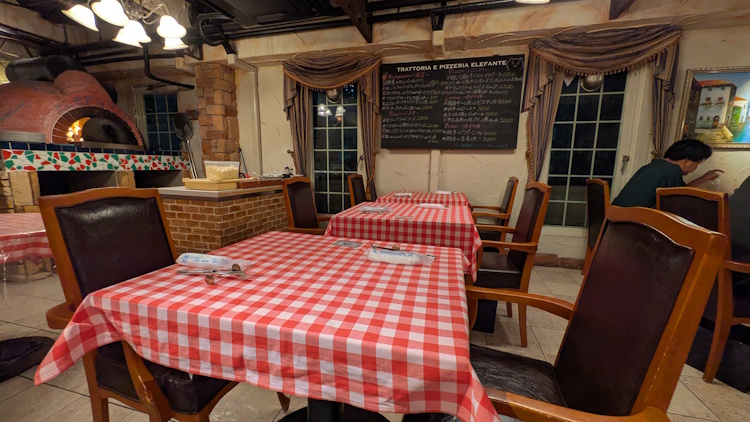
Nice place.
As I mentioned earlier, Elefante Trattoria in Kobe is not just a pizzeria; there is a full menu, including pasta and more. The table next to me got a seafood dish of fish and shells – I absolutely want that next time. I had a busy itinerary on this trip, or I would have gone back just to try that seafood dish. Everything was “high end,” but not overly expensive.
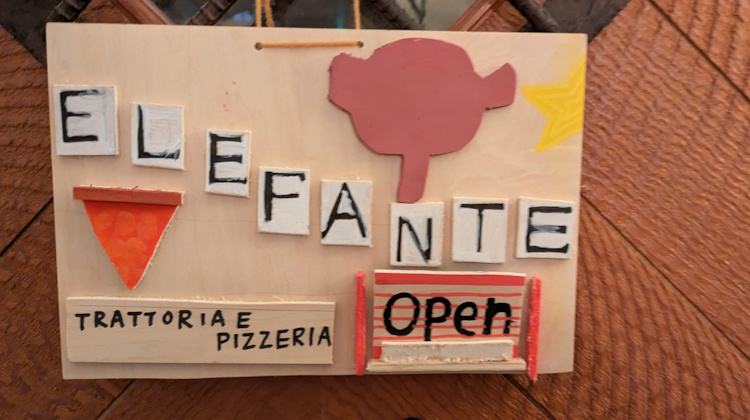
Elefante is doing the most common type of pizza in Japan – Neapolitan pizza – but they are doing it in such a natural, organic way. I supposed actually being Italian might in fact help to create a different vibe.
Excellent pizza. Wonderful atmosphere. I want to go back.
Highly recommended.
Pizza Restaurants in Kobe
— Azzurri Pizzeria in Chuo-ku, Kobe
— Jesus Pizza NYC-style slices in Chuo-ku, Kobe
— Chicago pizza at BrewPub Starboard Pizza in Chuo-ku, Kobe
— Pizza slices at Kobe’s 2 Bro’s Pizza in Chuo-ku, Kobe
— Simple, neighborhood pizza at Pizzeria Allocco in Chuo-ku, Kobe